
Water on the floor at your business right now
A burst supply line, an overflowing floor drain or a toilet that will not stop running does not wait for business hours. If you are standing in water, the first few minutes decide how much stock, flooring and drywall you lose.
Call the 24/7 line at (603) 815-9179 and tell the dispatcher what is leaking, what floor it is on and whether anyone is hurt or any electrical gear is wet. A licensed plumber is sent as soon as one is available, and we never promise an arrival time we cannot control.
Do these things while you wait for the plumber. None of them need tools.
Find the main shutoff
Most commercial buildings have a main valve near the water meter or where the line enters the building. Turn it clockwise until it stops. If you cannot find it, tell the dispatcher.
Stop using the drains
If a floor drain or fixture is backing up, stop flushing, washing and running dishwashers. Every gallon you add has nowhere to go.
Keep people away from wet electrical areas
Water and live equipment do not mix. Switch off the breaker for a wet area only if you can reach the panel without standing in water. Otherwise leave it and call.
Move what you can
Lift stock, paper records and electronics off the floor. Take photos of the damage for your insurer before you clean up.
Restaurants and food service
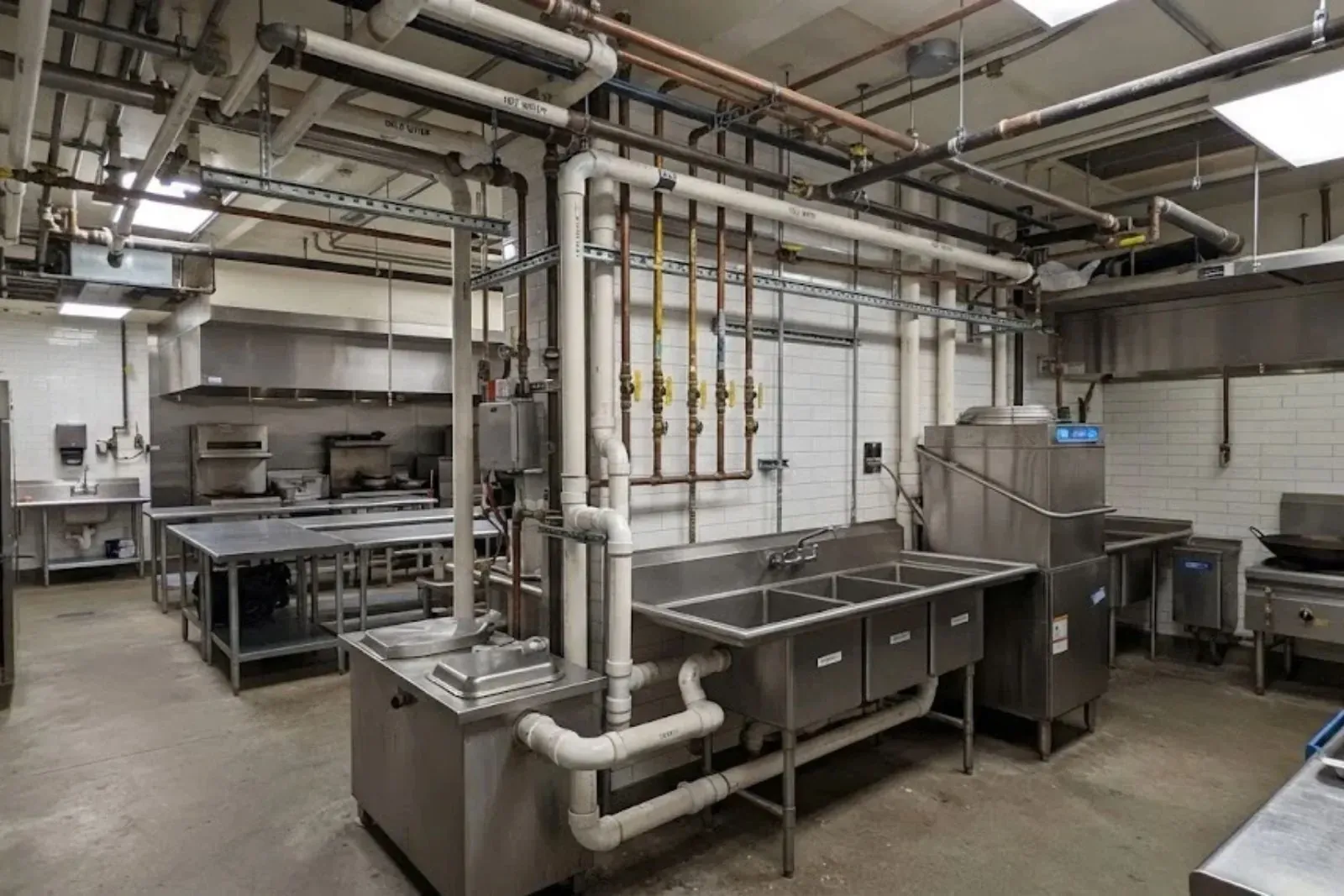
Kitchens put more load on a plumbing system than almost any other business. Fryer oil, starch and food scraps build up in drain lines and in the grease trap, and the first sign is usually a sink that drains slowly during the dinner rush or a floor drain that gurgles.
A clogged grease line left alone turns into a full backup at the worst time, usually a busy Friday. Regular line clearing and jetting cost far less than a closed kitchen.
Grease traps and the lines that serve them
Grease trap trouble often shows up first in the lines serving the trap. We clear and jet those lines so wastewater flows through, and trap pumping and disposal go to an approved hauler. How often it is needed depends on how much you cook and how big the trap is.
Ask the city which department sets grease trap rules for your kitchen. Pumped grease must go to an approved hauler, so we tell you what we find and leave disposal paperwork to the licensed hauler.
A kitchen drain or trap giving you trouble?
Call (603) 815-9179 any hour. A licensed plumber can clear the line, check the trap and tell you plainly what needs doing.
When a kitchen line keeps clogging, a camera shows whether the problem is grease, a bad slope or a broken pipe. For stubborn buildup we use hydro jetting, which scours the pipe wall instead of poking a hole through the clog.
Offices, retail and storefronts
Running or weak toilets
Commercial flush valves and tank-style toilets wear out with heavy use. A constant hiss or a toilet that needs two flushes points to a worn valve or a partial clog.
Slow restroom drains
Paper towels and wipes in a restroom line clog it fast. If more than one fixture is slow, the clog is in the shared branch.
Water stains on ceilings
A stain below a restroom or a mechanical room usually means a supply or drain leak overhead. It can run for weeks before it shows.
Pressure that drops at peak times
Low pressure on upper floors can mean a failing pressure valve, a partly closed shutoff or old corroded piping.
Commercial leak detection
If your water bill climbs and nothing looks wrong, a hidden leak may be running in a slab, wall or buried line. A quick check is to shut off every fixture and watch the meter. If it keeps moving, water is going somewhere.
We use acoustic listening gear and thermal imaging to narrow it down, but be aware that some leaks are hard to pin down, especially under a slab in a building with many tenants. We will tell you what we found, what we could not confirm and what the next step costs before we open anything. For a smaller or residential problem, see our leak detection page.
Multi-unit buildings, landlords and property managers
In a multi-unit building, one clog or leak affects more than one tenant. A stack that backs up can send wastewater into the lowest unit, and a slow leak in a chase wall can damage three apartments before anyone sees it.
Property managers should know where the main shutoffs are, label them and share the location with on-site staff. That one habit shortens almost every emergency call.
Before you call about a tenant issue
Having these answers ready speeds up dispatch.
- Which unit or floor is affected, and is the problem inside one unit or the shared line?
- Is water still running, or have you already closed a valve?
- Is anything electrical wet?
- Who can give the plumber access, and is there a keyholder on site?
- Do you need an invoice split between owner and tenant?
Scheduled maintenance or an emergency
Schedule it this week
- Slow drain with no overflow
- Dripping faucets and running toilets
- Grease trap lines backing up
- Backflow device test or paperwork
- Low pressure that is steady, not sudden
Call the 24/7 line now
- Water running that you cannot stop
- Sewage backing up through a floor drain
- A ceiling dripping over electrical gear
- No water to the whole building
- A gas smell (leave and call the gas utility or 911 first)
Backflow testing for commercial buildings
A backflow preventer keeps dirty water from flowing backward into the clean supply. Backflow devices usually need periodic testing. A failed test means the device needs a repair or replacement before it can be certified.
Ask the Methuen Inspections Division and the water department what applies to your building and your device. The 2022 fee schedule listed 30 dollars for a residential backflow device permit and 50 dollars for a commercial one, so check the current fees with the Inspections Division at 978-983-8625.
Backflow device testing should be done according to the manufacturer's guidelines and any rules your water department sets, so keep each test report on file for your building.
Floor drains, lift pumps and storm drains
A floor drain that overflows after heavy rain is often a sign that the line downstream cannot keep up. Part of Methuen's sewer system is combined, so storm flow and wastewater share pipes in some areas. In a low level, that can mean sewage rising through a floor drain, and a backwater valve may be worth asking about.
If your building uses a lift pump or sewage ejector to move waste uphill from a basement restroom, a failed pump or a stuck float causes overflow quickly. Listen for a pump that runs constantly or not at all, and call early.
Storm drain cleaning is a separate job from interior drains. Catch basins on a parking lot fill with sand and leaves, and a clogged one sends water toward your door. We can jet and clear lines we can reach, but work in the public street belongs to the city.
Older buildings and the Methuen water supply
Methuen's water comes only from the Merrimack River, and the city adds a phosphate corrosion inhibitor to protect pipe walls. Even so, older buildings around Broadway and the historic districts may still have galvanized steel or aging cast iron inside the walls, and those pipes narrow and fail with age.
Methuen's local historic district reviews exterior changes visible from a public way. Ask the commission before changing exterior vents or piping. For old piping that is failing throughout, a repiping plan is usually cheaper than chasing repeated leaks.
What we do and do not handle
We handle plumbing: water supply, drains, sewer connections, backflow devices and gas piping work done by a licensed gas fitter. We do not handle fire sprinkler systems or air conditioning, and we will say so rather than guess.
Common commercial plumbing calls
| Problem | Likely cause | Usual first step |
|---|---|---|
| Kitchen sink slow at peak hours | Grease in the branch line | Camera check and jetting |
| Sewage at a floor drain after rain | Overloaded line or combined sewer flow | Clear line, check backwater valve |
| Restroom toilet runs nonstop | Worn flush valve or flapper | Replace valve or internals |
| Water bill jumps, nothing visible | Hidden slab or wall leak | Meter test, then leak location |
| Backflow device flagged by inspector | Failed test or overdue certification | Test and repair or replace |
What affects commercial plumbing costs
What affects the price
Commercial jobs vary a lot, so we name the factors rather than guess. You will get a clear price before work starts.
Want your real number? Call (603) 815-9179 and we will talk through your building.
Questions from owners and property managers
Yes. The line at (603) 815-9179 is staffed around the clock, including nights, weekends and holidays. We dispatch a licensed plumber as soon as one is available and the steps for shutting off water while you wait are on this page.
No. We handle plumbing only. If a leak turns out to come from a sprinkler line or non-plumbing heating equipment, a different trade handles it, and we can make the plumbing side safe.
Backflow devices usually need periodic testing. Ask the Inspections Division and water department who may test and certify the device. We can repair or replace it.
We clear and jet the lines serving the trap and can document what we find. Trap pumping and disposal go to an approved hauler, and your local rules govern the schedule.
That depends on your lease and local law, and we cannot advise on it. We can write the invoice to separate the owner's items from the tenant's if you tell us how you want it split.
Sometimes. We find the leak first, then open the smallest section needed. Some pipes are inaccessible and need more opening, and we explain that before we start.
In areas where the sewer is combined, a heavy storm can fill the line past capacity. A backwater valve or a cleared line may help, and a camera check shows which.
Still unsure which call to make? Phone (603) 815-9179 and a dispatcher will help you decide.