
What the flange does and how it fails
The flange
A round collar fixed to the floor at the top of the drain pipe. It has slots for the bolts and a flat face the toilet sits against.
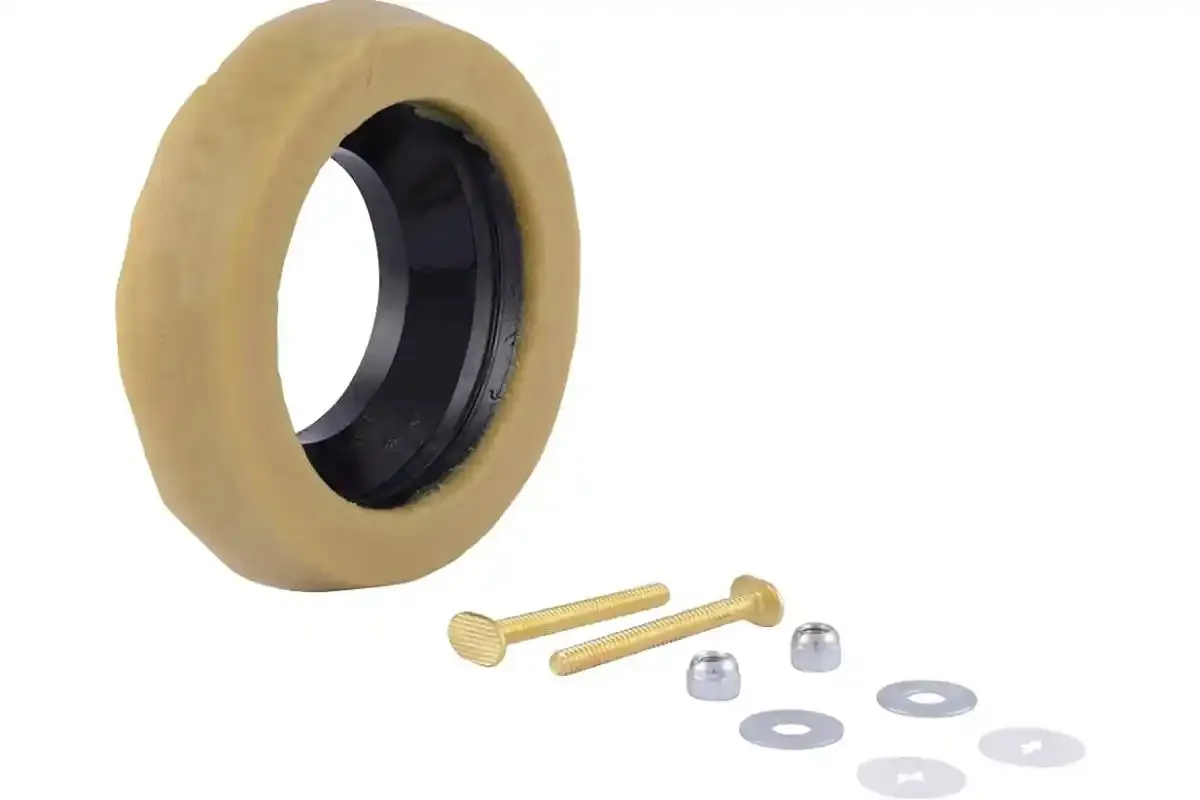
The wax ring
A soft ring between the toilet horn and the flange. It makes the water and gas seal. It cannot fix a flange that is too low or broken.
Closet bolts
Two bolts that slide into the flange slots and hold the toilet down. They should be snug, not cranked, because porcelain cracks.
The subfloor
The wood under the flooring. A flange screwed into soft or rotted wood cannot hold the toilet steady.
Flanges fail in a few predictable ways. Plastic ones crack when a toilet is tightened too hard. Cast iron ones rust and break at the slots. Brass flanges corrode where the bolts sit.
Floor changes cause more trouble than age. When new tile or vinyl goes in over the old floor, the flange can end up below the finished surface, and the wax ring stops sealing.
Flange types and what each is made of
| Type | Where you see it | Typical weak spot |
|---|---|---|
| PVC or ABS plastic | Most newer homes, glued onto plastic pipe | Cracks around the bolt slots |
| Cast iron | Older homes with cast iron drain | Rust and broken ears |
| Brass or bronze | Soldered to lead or copper in older systems | Corrosion, loose bolts |
| Stainless or steel ring | Repair kits over a damaged flange | Needs a solid floor to anchor to |
| Offset flange | Used when the drain is not centered | Adds a bend, so it needs proper fit |
How high the flange should sit
As a general rule, the flange should rest on top of the finished floor, not below it. The wax ring needs a flat, firm face at the right height, and a flange recessed below the floor leaves a gap the ring cannot close.
Manufacturer instructions and Massachusetts plumbing code (248 CMR) govern the exact figures, so follow the instructions that come with your flange and toilet. If your new flooring raised the surface, use a flange extender or have a plumber reset the flange.
A wobbling toilet is a warning
Rocking means the seal is breaking. Each flush can push water into the floor. Stop using the toilet, shut the supply valve, and look at the base for staining, soft flooring, or a musty smell.
Repair ring or full replacement
A repair ring is usually enough when
- The flange pipe is sound and firmly attached
- Only the top ring is cracked or has a broken ear
- The subfloor is solid when you press it
- There is no sign of a long-running leak
Replace the flange or pipe section when
- The pipe under the flange is cracked or separated
- The iron has rusted through
- The subfloor is soft, stained, or crumbling
- The drain is too low relative to the floor
- Earlier repair attempts keep failing
Steps for a basic flange and wax ring swap
Shut off, drain, and remove the toilet
Close the supply valve, flush, and sponge out the tank and bowl. Disconnect the supply line and remove the nuts on the closet bolts. Lift the toilet straight up and set it on a towel.
Inspect the flange and the floor
Scrape off the old wax. Look for cracks, rust, and a loose flange. Press the floor around it with a screwdriver. If it is soft, stop. This is a subfloor job.
Fix or replace the flange
Fit a repair ring over a cracked top with stainless screws into solid wood. Replacing a flange glued to the drain pipe is plumber work, because it means cutting and gluing pipe.
Set new bolts and a new wax ring
Slide new closet bolts into the slots and set a fresh ring on the flange or the toilet horn, as the product directs.
Seat the toilet and test
Lower the toilet straight down over the bolts, press firmly, and tighten the nuts alternately. Reconnect the water, flush several times, and check for leaks at the base.
When rot means you should call
A soft subfloor is the clearest sign to stop. A flange cannot hold a toilet if the wood under it is wet and crumbling, and the leak that caused the rot may still be active.
Other red flags include a ceiling stain below the bathroom, sagging flooring, a smell that returns after cleaning, and water that appears when the tub or sink drains. Our toilet repair visits can include the flange check, and bigger jobs fall under plumbing installation.
If you live in Andover or Haverhill and a toilet has been rocking for weeks, do not wait. The longer a seal leaks, the larger the repair becomes.
Wax ring and flange kit makers print installation guidelines on the package, and following them for your flange type matters. Cutting or replacing drain piping is work for a licensed plumber under 248 CMR, with a permit where required.
What drives the cost
Cost factors
The price follows the damage, not the flange alone.
Want your real number? Call (603) 815-9179 and get a clear price before work starts.
Safety and what not to do
- Do not overtighten closet nuts. Porcelain cracks without warning.
- Wear gloves, because the area has bacteria.
- Never use a torch near a plastic drain pipe or near the wood floor.
- Do not stack two wax rings to make up for a low flange.
- Plug the drain opening with a rag while you work to block sewer gas, and remove it before reseating.
Permits for toilet work in Methuen
Under Massachusetts rules (248 CMR 3.05), plumbing permits are issued to licensed plumbers, and minor repairs are exempt. Emergency work must be inspected by the next working day. Resetting a wax ring and bolts is generally minor, but replacing a flange pipe or reworking drain pipe may count as plumbing work.
Practical consequence: if you are unsure which side your job falls on, call the Methuen Inspections Division at 978-983-8625 before you start. The 2022 schedule listed a $5 per fixture line, so check current fees. A licensed plumber pulls the permit for you when one is needed.
Source type: mass.gov plumbing board and 248 CMR 3.05, Methuen Inspections Division fee schedule.
Questions we hear
The flange may be low, the floor uneven, or the closet bolts loose in cracked slots. Stop tightening, since too much torque cracks the base, and have the flange checked.
Only if the flange is flat, undamaged, and sitting at the right height. A cracked or recessed flange will not hold a new seal.
Minor repairs are exempt under state rules, but replacing flange pipe may count as plumbing work. Call the Inspections Division at 978-983-8625 if you are unsure.
It is a spacer that raises the sealing surface when the finished floor has been built up. Use one made for the job and follow the toilet maker's instructions.
Press a screwdriver into the wood near the flange. If it sinks in or the wood feels spongy, stop and call. Water stains on the ceiling below are another sign.
The Methuen Inspections Division at 41 Pleasant Street, Suite 203, handles plumbing permits and can be reached at 978-983-8625. Permits are issued to licensed plumbers, not homeowners.
Not sure which case fits yours? Call (603) 815-9179 and describe what you see.