
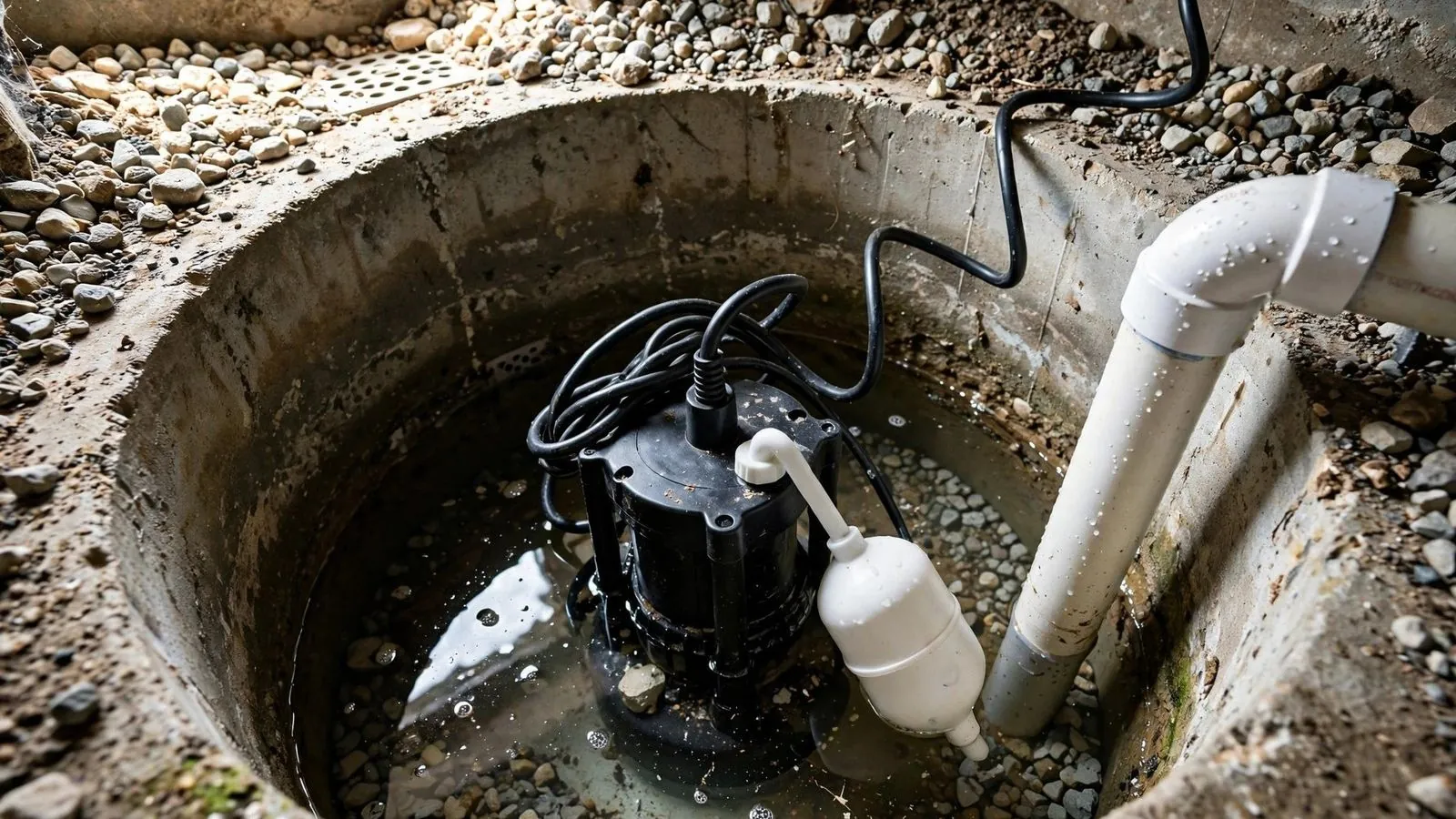
What the float switch does
The float is the pump's trigger. As groundwater fills the pit, the float rises and closes a switch that starts the motor. When the pit empties, the float drops and the pump stops. If the float cannot move, the pump cannot tell what is happening.
Tethered float
A ball on a cord that swings. It needs room in the pit and can snag on pipes, the wall or its own cord.
Vertical float
A float riding up and down a rod. It needs less room, but debris or a bent rod can bind it.
Electronic or diaphragm switch
No moving float. A sensor or pressure switch tells the pump when to run.
Common float problems and how to spot them
| What you see | Likely cause | Next step |
|---|---|---|
| Pump never starts, water rises | Float jammed, stuck low or switch dead | Unplug, free the float, test |
| Pump runs and will not stop | Float stuck high or hung up | Unplug, reposition, test |
| Pump short-cycles on and off | Float range too tight, or a failing check valve | Check the check valve and float position |
| Humming but no pumping | Motor or impeller problem, not the float | Call a plumber |
| Pump runs only when you tap the float | Worn switch contacts | Replace the switch or pump |
Debris is a frequent culprit. Silt, small stones or a drain line that empties into the pit can bring in material that fouls the float. Pit size matters too, since a cramped pit leaves the float hardly any room to swing.
Pit filling and the pump is silent?
Call (603) 815-9179 and a licensed plumber can look at it.
How to test and free the float
Unplug the pump
Pull the plug first. Never reach into a pit with the pump energized, and do not touch the cord if the floor is wet.
Look for a snag
Check whether the float is tangled in its cord, caught on the discharge pipe or sitting against the pit wall. Gently free it.
Reposition
Make sure the float can swing or slide through its full range. A strap or clip may be needed to hold the cord clear.
Plug in and add water
Plug into a GFCI outlet. Pour a bucket of water into the pit and watch for the pump to start, empty the pit, and stop.
Check the check valve
With the pump off, water in the discharge pipe should stay there. A check valve that fails lets water fall back and can cycle the pump.
Safety
Water and power meet in a sump pit. Use a GFCI outlet, keep the cord off the floor, and call a plumber if the outlet or wiring looks wet or damaged.
Repair, replace the switch or replace the pump
Float or switch fix makes sense when
- The pump motor runs when the float is lifted by hand
- The pump is relatively new
- Only the cord or the float travel is the issue
- The check valve and discharge are sound
A new pump makes sense when
- The motor hums or is hot to the touch
- The pump is old and has been failing repeatedly
- The housing is cracked or corroded
- The switch is built into the pump and cannot be replaced
Many pumps have a piggyback plug that lets the float plug into the pump. If the float fails, a swap of the float alone can work. For a worn pump, see sump pump repair for what the visit involves.
DIY or call a plumber
Freeing a tangled float on an unplugged pump is a simple job for most homeowners. Replacing the switch, changing the pump, or running a discharge line is plumbing work, and electrical issues belong with an electrician.
Wiring and float setup details come from the pump maker's installation instructions, the standard for your model. Changes to the discharge piping fall under the Massachusetts plumbing code (248 CMR), and a licensed plumber can pull any permit needed.
- DIY: unplug, untangle, retest
- Call: pump runs but moves little water, check valve failed, discharge frozen, or standing water near the outlet
- Call: any hint of wet wiring or tripped breakers
If the pit is overflowing now, call (603) 815-9179 and move belongings up off the floor.
What shapes the repair cost
- Whether the float, the switch or the whole pump is at fault
- Pit size, depth and access
- Pump type, and whether there is a battery backup
- Check valve and discharge pipe condition
- Same-day or after-hours timing
Call (603) 815-9179 for a clear price before work starts. If groundwater keeps overwhelming the pit, basement waterproofing may be the longer answer. We dispatch to Lawrence and North Andover as well.
Methuen flood history and why the float matters
The Spicket River gauge at Methuen crested at 9.86 feet on March 16, 2010, against an 8.0 foot flood stage. Methuen DPW reports flash flooding two to three times a year along the Bloody Brook and Jackson Street corridor.
In those conditions a pump that runs for hours must have a working float. If you live in or near that corridor, test your pump before heavy rain, not during it.
Source type: National Weather Service, Methuen DPW resilience report.
Questions we hear
The float may be stuck high, or the check valve may be letting water drop back into the pit. Unplug the pump and check both.
Often, yes, if the switch is a separate unit. If it is built into the pump, a new pump may be simpler.
Test it before the wet season and after any storm that filled the pit. Pour in a bucket of water and confirm it starts and stops.
A vertical float suits narrow pits and a tethered float suits roomy ones. Neither is better in every pit.
Most discharge lines use one so water does not run back into the pit. A plumber can confirm what your setup needs.
The DPW reports flash flooding two to three times a year along the Bloody Brook and Jackson Street corridor. Elsewhere, ask the city or watch where water gathers in your basement.
Not sure which case fits yours? Call (603) 815-9179 and describe what you see.