
Why coconut oil is worse than most oils
Coconut oil melts at a temperature a little below a warm room. That is why it looks like liquid in a hot pan and like white lard in a cool jar. Inside a drain, the water around it is cold, so it solidifies on the pipe wall.
Plumbers lump coconut oil in with fats, oils, and grease, usually shortened to FOG. Bacon fat, butter, shortening, and cooking oils all behave the same way. Coconut oil just sets harder and faster.
The hot water myth
Hot water and dish soap can break grease into tiny droplets for a few seconds. The droplets cool a few feet later and stick to the pipe again. Boiling water can also soften glued plastic joints and crack older porcelain, so do not use it as a fix.
Myth or fact: common grease habits
| Habit | What really happens | Do instead |
|---|---|---|
| Pour oil down the drain with hot water | It cools and coats the pipe a few feet away | Let it cool and bin it |
| Run the disposal to chop up grease | The grinder does not stop it from sticking | Scrape pans first |
| Add soap and run hot water | Short-term, then it redeposits | Wipe with paper towel |
| Use liquid drain opener | Can burn pipes and skin, may not touch the plug | Call a plumber |
| Put coconut oil in the sink after skincare use | A small amount adds to a film over months | Wipe it off with tissue |
What to do with coconut oil and cooking fat instead
Better disposal habits
Keep a small container by the stove and it becomes automatic.
- Let used oil cool completely in the pan or a jar.
- Pour or scrape it into a sealed container, an empty can, or a milk carton.
- Put the container in the trash, not the compost or the toilet.
- Wipe greasy pans and plates with a paper towel before washing.
- Fit a sink strainer and empty it into the trash.
Cold, hardened coconut oil also scrapes out of a jar cleanly. If you have a bit stuck on a bowl, wipe it with a paper towel first and then wash it. The grease never touches the drain.
Read the label on any drain product before you use it, because the directions and pipe warnings are the honest guide. Taking apart anything beyond the trap is work for a licensed plumber, and mass.gov lets you verify a licence. For any drain product, follow the manufacturer's guidelines on the label and never mix products.
How to clear a grease clog yourself
Stop pouring things down it
Every additional bit of grease or food adds to the plug. Let the sink rest while you work.
Scoop and bail
If the sink is full, use a cup to remove the standing water into a bucket. Put on gloves, because the water is dirty.
Clear the trap
Place a bucket under the P-trap, loosen the slip nuts by hand, and slide the trap off. Scrape out the grease and rinse the trap in a utility sink, not the kitchen sink.
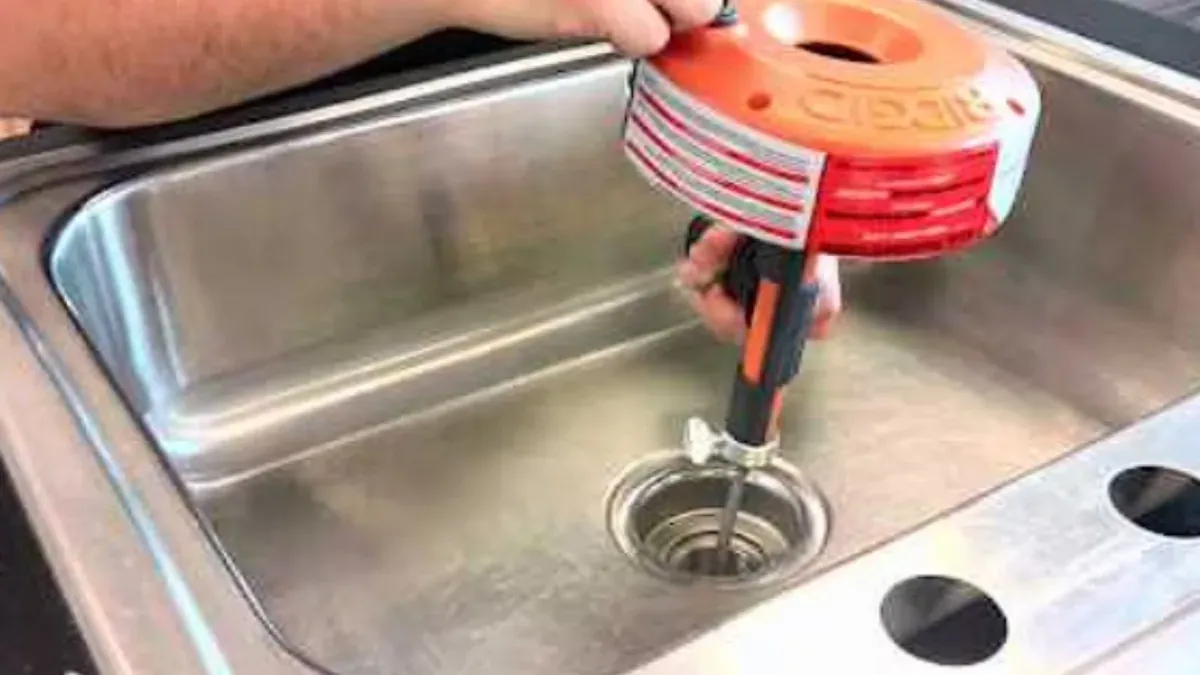
Run a small hand auger
Feed a hand auger into the wall pipe and turn slowly. Pull it out, wipe it, and repeat until it moves freely.
Reassemble and test
Tighten the nuts by hand plus a quarter turn, run warm tap water, and check for leaks at each joint.
Stop and call a plumber if you see this
Likely a local grease clog
- Only the kitchen sink is slow
- Smell is greasy or sour at the sink
- Clearing the trap helps for a while
- Pipes under the sink are cold and sound normal
Likely a deeper problem
- More than one drain is slow or gurgling
- Water backs up in a tub, shower, or basement drain
- The clog returns within days after clearing
- A cable will not pass the first bend
- You see sewage or smell it in the house
A cable gets through a plug, but hydro-jetting is better at scrubbing the grease off the pipe wall. If the problem is a regular slow drain, start with drain cleaning by a licensed plumber. We also take calls from Lawrence and North Andover kitchens.
Cost factors for a grease clog
Where the plug sits
A trap or branch line is faster to reach than a main stack or a buried line.
Method
A cable machine is the usual first step. A jetter is used when grease coats the walls along a long run.
Access
A cleanout speeds things up. If a plumber has to pull a fixture or open a wall, time goes up.
Repeat history
A line with repeated grease clogs may need a camera look and a maintenance plan.
A clear price comes before work starts. Call (603) 815-9179 and describe the sink, and a licensed plumber will tell you which method fits.
Safety notes
- Never mix drain cleaners. Mixing chemicals can release toxic gas.
- Wear gloves and eye protection when you open a trap.
- Do not use a flammable liquid or a torch on a slow pipe.
- Keep children and pets away from the bucket and the opened pipe.
Methuen's sewer system and where grease ends up
Methuen's sewer is treated by the Greater Lawrence Sanitary District in North Andover, and part of Methuen's sewer system is combined, with five combined sewer overflow outfalls in the draft EPA permit, four to the Merrimack River and one to the Spicket River.
Practical consequence: grease that leaves your house does not disappear. It adds to the load that shared pipes and the treatment plant have to carry. In a combined section, storms add more flow, so a grease-lined pipe is less able to cope. Keeping fat out at the sink is the cheapest way to help.
Source type: EPA draft permit for the Greater Lawrence Sanitary District, Greater Lawrence Sanitary District.
Questions we hear
A small smear from a pan wiped with a towel is unlikely to cause trouble. Pouring it down on purpose is what builds a clog, so keep the habit to nothing.
Usually, yes. Coconut oil solidifies at room temperature, while olive oil stays liquid longer. All cooking fats add to buildup, though, so treat them the same.
Not reliably. The fizz can loosen light film, but it does not melt a solid plug. A trap clean-out or a cable works better.
Multiple fixtures draining slowly, gurgling, or backups in the lowest drain point suggest a main line problem. A camera shows grease and roots. A sewer inspection by a licensed plumber confirms it.
Part of the city's sewer system is combined, and storm flow adds to what pipes carry. Grease narrows pipes, so keeping fat out of your own line helps both your house and the shared system.
Not sure which case fits yours? Call (603) 815-9179 and describe what you see.