
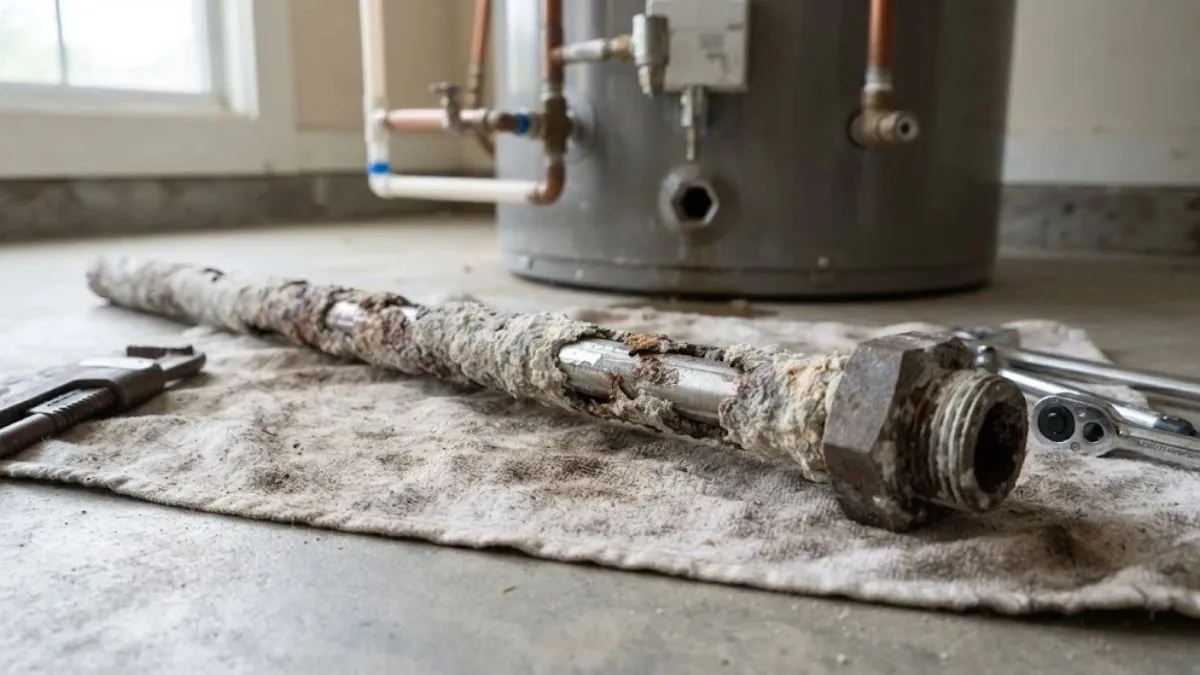
What the anode rod does and why it wears out
Steel tanks have a thin glass lining, and it always has tiny flaws. The rod is made of magnesium or aluminum, which corrode more readily than steel. Water attacks the rod instead of the tank wall, so the rod is a sacrificial part.
Once the rod is mostly gone, the tank itself takes the attack. At that point the clock is running on the whole heater, which is why checking the rod is cheap insurance on a tank that is otherwise healthy.
Magnesium
Common in standard tanks. Protects well and wears at a steady pace.
Aluminum
Often chosen where a different water makeup is a concern. Ask the plumber which fits your water.
Powered rod
Uses a small electric current instead of wearing away. Costs more and needs a power source at the tank.
Signs the rod is spent
Most homeowners never see the rod. The tank gives hints instead: popping or rumbling, hot water that smells like rotten eggs, or rusty-looking hot water from the tap but clear cold water. A tank older than its rated life is a candidate whether or not it complains.
Things to check before you touch a wrench
- Hot water smells or looks brown while cold water is normal
- The tank pops or rumbles during heating
- The tank is old enough that the rod has probably never been inspected
- There is rust at the fittings or a wet spot at the base
- You have a few feet of clear space above the tank
If the tank leaks, replace the tank
Water coming from the tank body, not a fitting, means the steel has failed. A new rod cannot fix that. See your options for water heater replacement.
Not sure what you are looking at?
A licensed plumber can inspect the tank, the rod and the fittings in one visit. Call (603) 815-9179 to schedule.
Tools and the clearance problem
You need a 1-1/16 inch socket, a breaker bar, pipe thread sealant rated for potable water, a garden hose, and a bucket. A flexible rod made of linked segments helps when the ceiling is low.
The rod is as long as the tank is tall. A straight rod needs an equal amount of clear space above the heater to be pulled out. In a basement with ductwork or a low joist, you may have no room at all. That is the main reason people give up on this job halfway.
| Rod type | Good for | Watch out for |
|---|---|---|
| Straight rod | Open space above the tank | Needs clear height equal to the rod length |
| Segmented rod | Low ceilings and tight closets | Slightly weaker joints, handle gently |
| Combination rod with outlet | Tanks needing more hot-side protection | Check fit against the tank's port |
| Powered rod | Frequent rotten egg smell | Needs power and a higher purchase price |
Steps to replace the rod
Shut off the energy source
Turn the electric breaker off, or set a gas unit to pilot or off per its label. Never work with power on.
Close the cold supply and relieve pressure
Close the cold inlet valve. Open a hot faucet nearby, and drain a few gallons through the hose so the water level drops below the rod.
Loosen the rod
Fit the socket over the rod's hex head, set the breaker bar and give a steady pull. A rod that does not move under firm, controlled force is seized. Stop there.
Inspect and install
Check the old rod. If more than a few inches of bare steel wire shows, it is spent. Wrap the new threads with sealant, thread the new rod in by hand, then snug it.
Refill and test
Open the cold supply and a hot faucet until water flows steadily. Check the rod port for drips, then restore power or gas and relight as directed.
DIY or call a licensed plumber
A reasonable DIY job
- Clear overhead space and an accessible rod
- An electric heater with the breaker easily shut off
- Rod comes loose with a steady pull
- Tank is not leaking from the body
Call a plumber
- Rod is seized or the hex head is rounding off
- No clearance to remove a straight rod
- Gas unit where the pilot or burner must be handled
- Rust, leak or a very old tank
- Water that comes out brown even after the fix
Do not force a stuck rod with a pipe wrench or a long cheater pipe. You can crack the tank port and turn a rod problem into a flood. A plumber has the tools and the judgment to stop at that point.
What drives the cost
- The rod type and length you choose
- Whether the rod is seized and needs extra work
- Access to the tank and any clearance workaround
- Whether the tank is worth saving at its age and condition
- Draining, refilling and any fittings that fail on the way
Call (603) 815-9179 for a clear price before work starts. If the tank is near the end of its life, our crew may suggest water heater repair or a swap instead. We also serve Andover and Haverhill with the same service.
Methuen water and how fast a rod wears
Methuen draws all of its water from the Merrimack River. The Methuen Water Department treats it with chlorine dioxide, alum, carbon filtration, pH adjustment with sodium hydroxide, a blended phosphate corrosion inhibitor and chlorine. The 2023 report listed sodium at 42 ppm, and the department publishes a new report each year.
Water chemistry affects how quickly a rod is consumed. The city's report does not give a hardness figure we can cite. Ask the Methuen Water Department for its latest annual water quality report, or test your own tap, then pick a rod type and inspection schedule based on what you see.
Source type: Methuen Water Department annual water quality report (CCR), MassDEP.
Questions we hear
Many manufacturers suggest checking it periodically, and the manual for your tank states the interval. If you never have, start with a look when the tank passes the midpoint of its rated life.
Sometimes. The smell is often caused by bacteria reacting with the magnesium rod. A different rod type or a tank flush can help, but a plumber should confirm the cause.
Gas units add combustion and venting hazards, and relighting the pilot is a step many people should not do alone. If you are not experienced, call a licensed plumber.
Stop and call a plumber. A broken rod can leave a fragment in the tank, and forcing it may damage the port.
If the tank body is sound and the rod is the only issue, a new rod can extend its life. If the tank leaks or is well past its rated life, replacement is the safer choice.
It can. The department adds a corrosion inhibitor and adjusts pH, and the report lists sodium at 42 ppm for 2023. Read the latest report or test your tap, then ask a plumber which rod material suits it.
Not sure which case fits yours? Call (603) 815-9179 and describe what you see.