
Safety first: gas smell and carbon monoxide
If you smell gas, leave
Do not flip switches, use a phone inside, or look for the source. Walk out, then call 911 and Eversource from outside or from a neighbor's home. Gas appliance work is licensed work in Massachusetts, so do not try to fix a gas leak or a gas valve yourself.
Carbon monoxide has no smell. A boiler that is sooting, running with a yellow flame, or short-cycling can produce it. Have working CO alarms near sleeping areas and replace the batteries on a schedule.
If a CO alarm sounds, get everyone outside into fresh air and call 911. Do not go back in until the fire department says it is clear. After that, have the boiler checked by a licensed professional before you use it again.
Quick triage: what the symptom usually means
| What you see | Likely area | Safe first check |
|---|---|---|
| No heat, boiler silent | Thermostat, power, or a tripped safety | Raise the thermostat, check the boiler switch and breaker |
| Boiler runs, radiators cold | Air in the loop, a closed zone, or a circulator problem | Feel the pipes, bleed the radiator, check zone settings |
| Pressure gauge reads low | A small leak or a failing expansion tank | Compare to your manual, look for drips or wet floor |
| Pressure climbs too high | Expansion tank or fill valve issue | Do not tamper. Call a plumber |
| Banging or kettling | Scale, low water, or flow trouble | Turn the boiler off and call |
Safe checks to run in order
Confirm the thermostat is calling
Set it a few degrees above room temperature on heat mode. Replace dead batteries. If the display is blank, the problem may be the thermostat itself.
Check power
Most boilers have a switch near the unit that looks like a light switch. Make sure it is on. Check the breaker for the boiler circuit. Reset a tripped breaker once, not repeatedly.
Read the pressure gauge
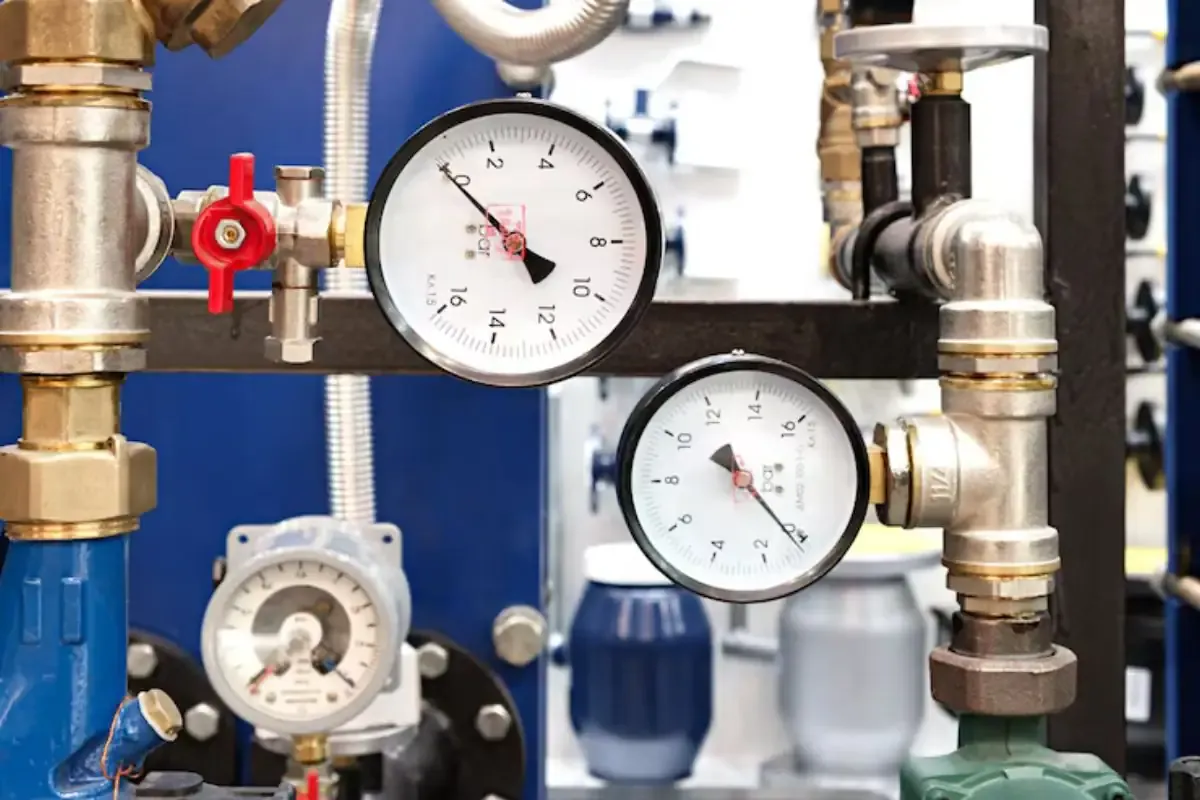
With the system cold, look at the gauge. Your manufacturer manual gives the normal range and the maximum. If it is below the low mark, there may be a leak or the system needs a plumber to add water.
Bleed air from radiators
This applies to hot water systems with baseboard or radiators, not steam. With the boiler off, open the bleeder valve slowly with the proper key and close it when water appears. Check the gauge afterward.
Look at the zone and reset
If your home has zone valves or multiple thermostats, check each one. Press the reset button once if your manual allows it. If the boiler locks out again, stop.
What a low pressure gauge is telling you
How worried should you be?
This is a general guide, not a diagnosis. Follow the instructions printed for your own boiler.
A boiler loses pressure when water leaves the sealed loop. It can leak from a valve, a pipe joint, the relief valve, or the expansion tank. It can also happen after bleeding a radiator.
Pressure that creeps up is a different problem. A waterlogged expansion tank or a leaking fill valve can push the gauge toward the relief setting, and that valve may then discharge water. Do not plug or cap it.
Do it yourself or call a plumber
Safe for a homeowner
- Raising the thermostat and replacing its batteries
- Checking the switch and the breaker
- Reading the pressure gauge and noting it
- Bleeding a radiator on a hot water system
- Keeping the area around the boiler clear
Leave to a licensed plumber
- Anything involving gas piping, valves, or the burner
- Repeated lockouts or a boiler that will not stay lit
- Pressure that keeps falling or rising
- Water leaking from the boiler, pipes, or relief valve
- Noises such as banging or rumbling
Our boiler repair visits cover diagnosis, pressure faults, and heat that will not return. If your hot water is also off, water heater repair may be part of the same call, since some boilers also feed an indirect tank.
Why gas work is licensed in Massachusetts
In Massachusetts, gas piping and fitting is licensed work. The Board of State Examiners of Plumbers and Gas Fitters licenses plumbers and gas fitters, and you can verify a licence on mass.gov.
The reason is simple. A leak, a bad flue connection, or a wrong pressure setting can cause fire or carbon monoxide. If someone offers to adjust a gas boiler without a licence, say no and ask to see it.
Your owner's manual is the standard for the right pressure range, since models differ. Gas fitters are licensed by the Board of State Examiners of Plumbers and Gas Fitters, and mass.gov has a licence lookup to confirm a name before work.
Cost factors for a no-heat or low-pressure call
What changes the price
The cause matters most. A thermostat or a reset is a short visit, while a leaking tank, a failed circulator, or a heat exchanger problem can mean parts and extra time.
Other factors include boiler age and accessibility, whether parts are on the truck, and the hour you call. A clear price comes before work starts, and a licensed plumber can tell you whether repair or replacement makes more sense. Call (603) 815-9179 to start.
Eversource work and the state code's 48 inch table
The city issued an alert about Eversource replacing cast iron and bare steel gas mains in Methuen neighborhoods in 2025. If you hear about street work near you, ask Eversource whether your street is affected, and know that Eversource is also the number to call for a gas smell.
The state residential building code table uses 48 inches as the frost depth for design. Practical consequence: exposed pipes, outdoor drains, and unheated spaces near a boiler can freeze before the ground does. Keep the system running in cold snaps and insulate pipes in garages and crawl spaces.
Gas boiler repair involving fittings, regulators, or valves is licensed gas fitter work in Massachusetts, so verify the licence before you let anyone start.
Source type: Methuen city alert (Eversource), 780 CMR residential code table, mass.gov plumbers and gas fitters fact sheet.
Questions we hear
Check the manual or the label on your boiler. Many residential hot water systems commonly sit in the low-to-mid teens on the gauge when cold, but the maker's number governs. If you cannot find it, call a plumber.
A small drop after bleeding a radiator is normal. A steady drop over days is not, because water is leaving the loop somewhere.
Air in the loop is a common cause, and so is a closed zone or a failed circulator pump. Bleed the radiators first and check the zone thermostats, then call if the heat does not return.
Only if your manual tells homeowners how and you are comfortable following it. Adding water to a hot boiler can crack it. If pressure keeps falling, the leak needs a plumber.
Leave the building and call 911 and Eversource from outside. Do not call the plumber first. After the gas company clears the home, a licensed gas fitter can repair the cause.
The city alert described replacement of older gas mains in neighborhoods. A boiler can lock out afterward if gas was interrupted, so check the thermostat and reset once. If it still will not light, call a licensed plumber.
Not sure which case fits yours? Call (603) 815-9179 and describe what you see.